
A tonsillectomy is a surgical procedure to remove the tonsils. It is mainly performed to treat sleep-related breathing issues or frequent infections. While adults sometimes need tonsillectomies, it is more common in children. For more on the underlying condition, see Tonsil & Adenoid Issues.
What are tonsils?
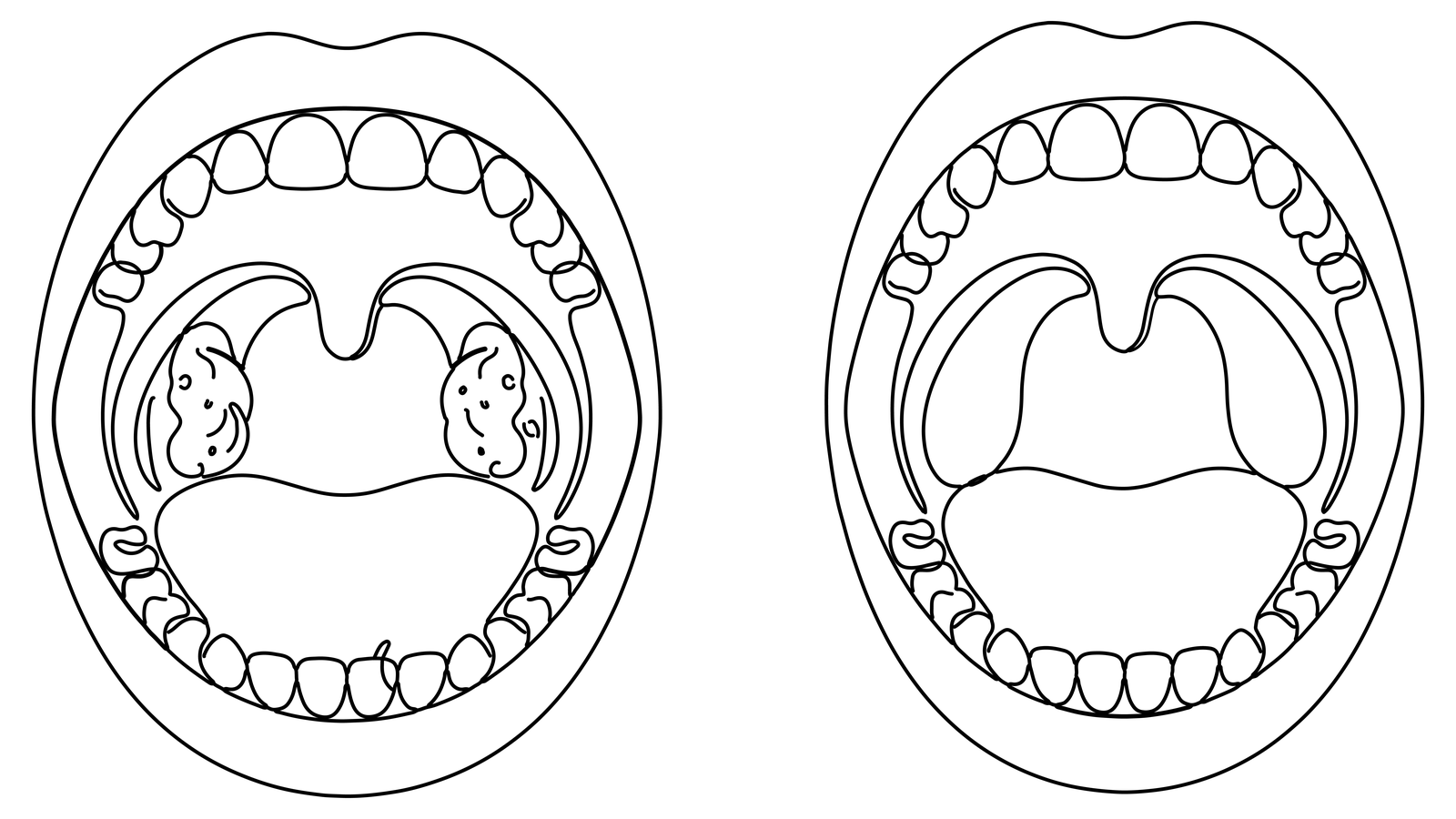
Your tonsils are the round, fleshy masses located on both sides of the back of your throat. They are part of your immune system and filter out germs that enter through your nose or mouth to protect your body from infection.
What is tonsillitis?
Sometimes, tonsils can become infected and inflamed due to viruses (e.g. colds, flu) or bacteria (e.g. strep throat). This is called tonsillitis. It commonly causes a sore throat, painful swallowing, swollen lymph nodes and fever.
Some children get repeated episodes of tonsillitis. This is called recurrent tonsillitis. This can negatively impact your child’s health and well-being, requiring multiple courses of antibiotics and time off from school.
Why is a tonsillectomy performed?
Your child may need a tonsillectomy if they have frequent problems with infections in the tonsils (tonsillitis) or around the tonsils.
Sometimes, your child may need their tonsils removed because they have grown so big that they obstruct the breathing passages at night. This can cause problems such as obstructive sleep apnoea or sleep disorders. In children, this is often combined with an adenoidectomy as well.
Other reasons why tonsils need to be removed include chronic infections (chronic tonsillitis), tonsil stones, which can cause bad breath and social anxiety, or growths associated with the tonsil.
When should a tonsillectomy be performed for recurrent infections?
Official guidelines recommend that a tonsillectomy may be considered when your child has the following number of episodes:
- 7 episodes in the past 1 year, OR
- 5 episodes per year for 2 years, OR
- 3 episodes per year for 3 years
Note: The above guidelines are recommendations only. Dr Padhye will assess your child’s individual health and circumstances before providing his professional recommendations.
Your initial consultation
All patients begin with an initial consultation with Dr Padhye. He’ll perform a thorough assessment, review your child’s medical history and answer any questions you may have. If a tonsillectomy is appropriate, he’ll present a surgical plan and discuss the procedure — so you can make an informed decision about whether to proceed.
The tonsillectomy procedure
A tonsillectomy is performed while your child is under general anaesthesia. Dr Padhye then removes the tonsils through the mouth. There is no cutting through the skin.
A traditional tonsillectomy (extracapsular tonsillectomy) involves the removal of the entirety of the tonsil. This exposes the underlying muscle bed, which takes a little time to heal. There is associated discomfort, as expected, as well as a bleeding risk.
Dr Padhye also offers an alternative approach known as an intracapsular tonsillectomy — also called a tonsillotomy, tonsil reduction or tonsil debulking surgery. The goal is to remove the majority of the tonsil tissue while leaving a thin layer behind to protect the muscle. This technique has been shown to have significant benefits regarding pain, bleeding risk, and overall recovery time, while carrying a very low risk of isolated tissue regrowth. This option is generally better suited for tonsil problems associated with breathing difficulties.
Dr Padhye will discuss the appropriate options with you and the pros and cons of each during your consultation.
Dr Padhye performs this procedure at The Memorial Hospital. Typically, children stay in hospital overnight.
After-care instructions
Before the procedure, you’ll be given verbal and written after-care instructions. Please follow them closely. If you have any concerns or queries, please contact the clinic.
Recovery
After waking from the procedure, your child will still be sleepy, have a very sore throat and may feel nauseous or vomit. It is expected that they will wake a little upset. Nausea usually settles quickly, and an IV drip inserted while they are asleep will provide fluids and anti-nausea medication. Pain relief will also be provided.
Dinner will be provided, but some children may not feel like eating. Children should be encouraged to eat a normal diet post-operatively, as the passage of food keeps the tonsil beds clean.
Recovery and time off school, childcare and other activities depend largely on the technique used for tonsil removal. Traditional tonsillectomy generally has a slightly longer recovery period (approximately 7–12 days) than intracapsular tonsillectomy (3–5 days).
Pain relief
Most children tolerate the surgical procedure well. Any pain is usually adequately managed with paracetamol and ibuprofen. Administer both regularly for the first few days, taking care not to exceed the maximum daily dose. Stronger pain relief may also be required, which will be prescribed by Dr Padhye. The goal is to keep children comfortable so they can eat and drink.
Pain may improve, then flare again around days 4–6 post-op, as the inflammation associated with healing typically peaks at this time.
Risks & potential complications
Although a tonsillectomy is considered a safe procedure, all surgical procedures, including tonsillectomies, carry risks. The major risks include:
- Bleeding
- Infection
- Dehydration
- Bad smell in the mouth or nose
- Voice changes
- Temporary regurgitation of swallowed liquids
- Change in taste sensation
Before your surgery, Dr Padhye will discuss the risks and complications with you.
When to seek medical attention
If your child experiences any of the following problems, please get in touch with our clinic immediately. If it is after hours, please contact your local GP or nearest emergency department.
- Constant high temperature
- Vomiting with or without fresh blood
- Increasing throat/ear pain not relieved by paracetamol
- Appearing ‘flat’ or unwell
- Dehydration accompanied by a dry mouth, sunken eyes, dry or loose skin or dark urine
Costs
Before proceeding, our practice will provide you with written documentation of all costs associated with your procedure. These costs will include your surgeon’s fee, anaesthetist’s fee and hospital fees. Claiming from your health insurance fund will also be explained to you.
Your follow-up appointment
Dr Padhye sees his patients approximately four to six weeks after their tonsillectomy. Our practice will coordinate the date with you before surgery. If you have any further questions before or after surgery, please feel free to call our clinic — we’re always here to help.